

2 minute read
Portsmouth, New Hampshire
High-performing Entrepreneur Owner-Managers (EOM™) thrive on demanding standards and candid feedback, but chronic disapproval is something fundamentally different. Disapproval may be one of the most toxic forces in human relationships because it attacks our sense of belonging while masquerading as an attempt to improve us. It attacks the person rather than improving their performance.
A high performer can tolerate—and often actively seeks—someone saying: “That wasn't your best work. Here's where I think you can make it better.”
What becomes toxic is the persistent underlying message: “You're disappointing me. You're doing it wrong. You're too much. You're not enough. Why can't you be different?”
Disapproval isn't exactly a feeling; it’s something we perceive from another person, which produces shame, rejection, inadequacy, anger, resentment, and/or fear.
For those of us who are EOMs™ (or another high-agency person), that creates an especially destructive psychological dynamic. We begin spending energy managing someone else’s disappointment instead of creating our own future.
Disapproval and disagreement are not the same thing. Disagreement is intellectual: I see this differently. Criticism can be developmental: You can do better. Disapproval is personal: I don't approve of who you're being. High performers often love the first two. It's the third that becomes corrosive.
High performers already carry an unusually demanding internal scorecard. The popular caricature is that successful people need constant praise. Often, it's almost exactly backward. Most high performers are already relentlessly self-evaluating. They don't need another person standing beside their internal critic with a megaphone.
And there is a paradox here worth exploring: The more accomplished someone becomes, the less visible their vulnerability to disapproval may be. From the outside they look bulletproof. Internally, repeated disapproval from someone who matters still lands incredibly hard and hurtful.
Disapproval redirects lifeforce. EOMs™ have a finite amount of positive energy. At their best, it goes toward curiosity, creation, relationships, possibility and what we might call becoming.
Chronic disapproval redirects that energy toward vigilance: Am I going to get criticized for this? Is this going to upset them? How do I explain myself? Should I make myself smaller?
Now the EOM™ isn't creating; they're defending. And defending is an extraordinarily expensive use of entrepreneurial lifeforce.
Eventually, striving can become proving. Disapproval is one of the most toxic forces in human relationships because it attacks our sense of belonging while masquerading as an attempt to improve us. Curiously, many of us exposed to chronic disapproval may actually become more successful, but only temporarily. We work harder. Achieve more. Make more money. Win another deal. Buy another company. Get another credential.
But underneath the striving, the motivation has quietly changed from: “Look what I can create” to: “Now will you approve of me?” This is connected beautifully to our recurring Bigelow distinction between the joy of striving and the illusion of arriving. Healthy striving is about who we're becoming. Approval-driven striving is an attempt to finally become enough in somebody else's eyes.
And now the counterintuitive part: this essay is not an argument for surrounding yourself with cheerleaders. Quite the opposite. High-performing EOMs™ need people around them who will tell them the truth. They need disagreement. They need challenge. They need someone willing to say: “Pete, I think you're full of crap on this one.”
The antidote to disapproval isn't approval. It's understanding + truth. Someone can understand you completely and still challenge you vigorously. In fact, those may be the people capable of challenging you most effectively, because you're not simultaneously wondering whether the relationship itself is at risk.
The people who bring out the best in us aren't the people who approve of everything we do. They're the people who somehow communicate something much more powerful:
I see you. I know who you are, I appreciate you, and I see the stone in your shoe. I'm not frightened by your ambition or your intensity or your occasional spectacular failures. I'll tell you the truth. And you don't have to earn your standing with me.
High-performing EOMs™ don't need our approval. But they do need freedom from chronic disapproval. Imagine how much more spectacular positive lifeforce gets radiated all around a high-performing EOM™ when they no longer have to use it proving that they are deserving of it.
What I am Reading / Listening to
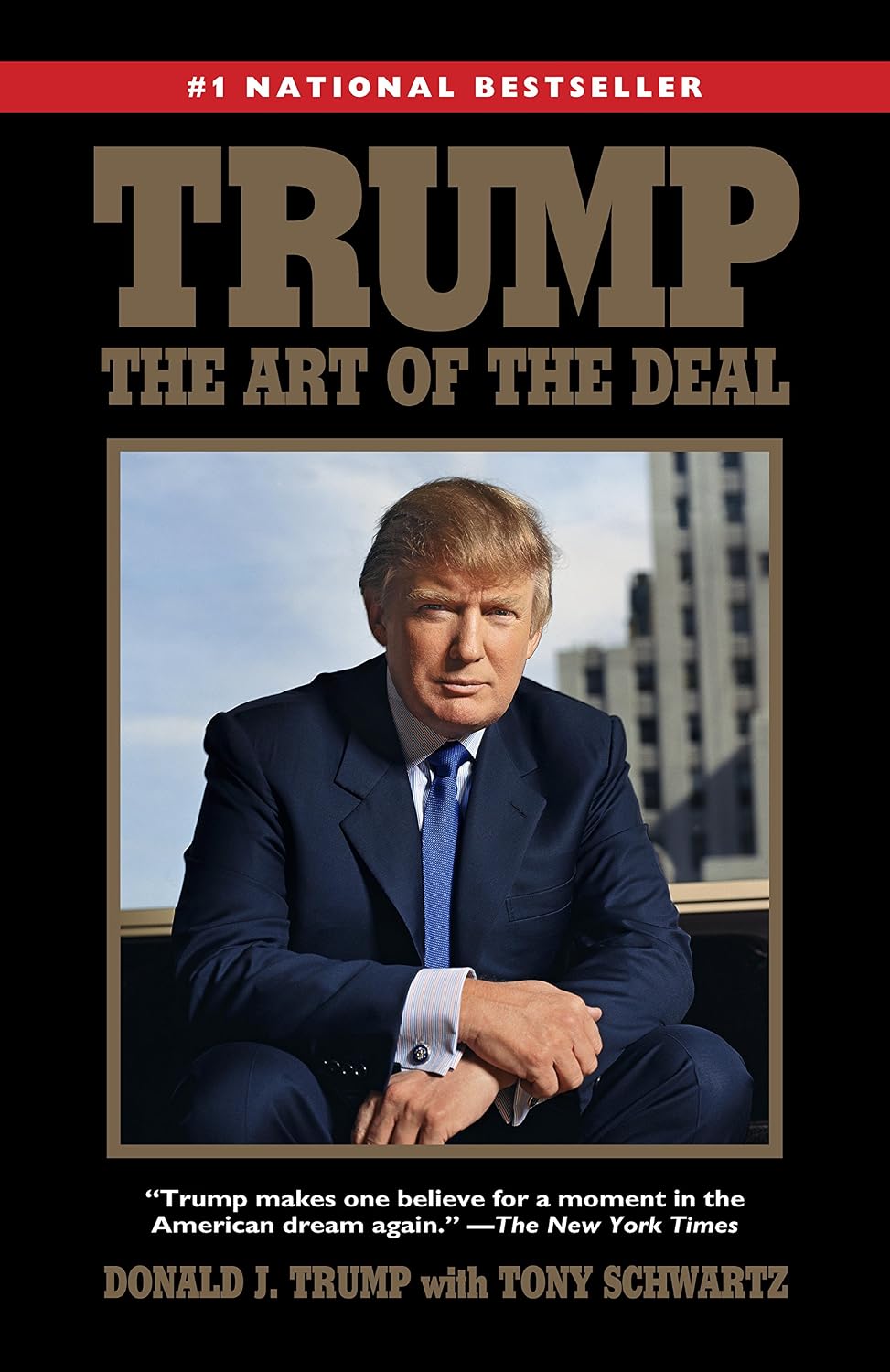
Trump: The Art of the Deal (1987)
By Donald J. Trump with Tony Schwartz
I confess I never read Trump: The Art of the Deal when it was published in 1987 nor…any time since then, until now. I wasn’t interested in what Donald Trump considered the art or the deal until…he was elected President the second time.
I have watched the press and to a large degree the general population take Trump literally, but not seriously. I advocate taking him seriously, but not literally. This little book explains why I think that. If you want to do more than critique, but really understand the man behind the grimace, how he thinks, how he makes decisions, how he treats the press, how he bluffs and negotiates—hell, he gave us his own roadmap(!). Candidly, if you are scratching your head about his behavior and you haven’t yet read this book, well, you really have not done your homework. Read it. Now. It’s easy.
To me, Trump: The Art of the Deal is best read not as a how-to manual for real estate (God no), but as a self-drawn cognitive map of how Donald J. Trump approaches risk, leverage, and power. Written decades before politics, the book lays out a worldview rooted in asymmetric thinking: aim very high, always create optionality, control the narrative, and negotiate from perceived strength.
For readers unfamiliar with Trump beyond current political headlines, the value of the book lies less in tactical advice—which is often over-simplified—and much more in its exposure to his first-principles instincts: relentless optimism, complete comfort with public pressure, and a willingness…no, an eagerness…to polarize rather than compromise.
Deals are treated as psychological contests much more than mere financial transactions, with branding, attention, and momentum carrying real economic weight. While the book is utterly self-mythologizing, it functions effectively as a roadmap to how Trump evaluates opportunity, conflict, and downside. For citizens, it’s useful not because it teaches what to think—but because it reveals how one currently highly consequential decision-maker does.
Entrepreneur Owner-Manager Quote
“I think of you guys often. The great advisors and facilitators of my liberation.”

© 2026 Bigelow LLC. All rights reserved.