

3 minute read
Portsmouth, New Hampshire
Many of you—our friends and Positive Enterprise Value Blog readers—have asked why is it that Bigelow employs a positive psychology approach. What’s the big deal—and what exactly does that mean and how is it practically applied? At Bigelow we draw on the theory and scholarly foundations of corporate finance and positive psychology. Most people understand the corporate finance approach. But positive psychology is not merely a “nice-to-have” soft skill—rather it’s embedded in how we prepare Entrepreneur Owner-Managers (EOMs) for a “someday” capital gain, and how we execute our M&A architecture, which directly shapes the economic and personal outcomes of their transactions.
Here’s how it works in practice:
We Begin with “The End in Mind.” Before talking about buyers, multiples, or deal structures, Bigelow asks Entrepreneur Owner-Managers to define their personal and professional life goals and post-transaction vision. This prevents a deal from being purely price-driven. Owners who clarify why they’re seeking a new majority owner for their business tend to choose the investor or acquirer whose culture and vision best match theirs — often leading to higher long-term satisfaction. In positive psychology terms, we guide clients on how to evolve from extrinsic drivers (money, prestige) to intrinsic ones (meaning, purpose, legacy).
Shaping the “Narrative of the Business.” Positive psychology research shows that humans make decisions in narrative form — they respond to stories, not just data. At Bigelow we say, “good ideas come and go, but stories stick.” Bigelow works with EOMs to craft a strength-based story about their business, focusing on: What’s working and how it can be expanded, the Company’s unique capabilities and culture; the founder’s legacy and purpose. This future-based framing builds buyer engagement with “what the business will become” not merely where it’s been. Because we view capital as a commodity and our friends/clients’ enterprises as what is rare and valuable, our architecture emphasizes competitive tension, raising valuations.
Building Entrepreneur Resilience During the Process. Ownership and leadership transition in an entrepreneur-owned business is emotionally intense and complex — owners experience fear of loss, identity uncertainty, and decision fatigue. Bigelow applies techniques from positive psychology (e.g., strength spotting, gratitude practice, reframing obstacles as opportunities) to help owners remain clear-headed under pressure. This helps EOMs through their natural ambivalence, reducing the risk of an owner “pulling the plug” on a great offer, and ultimately making a decision not in their best rational interest, due e.g., to emotional overwhelm.
Focusing on Fit, Not Just Price. Positive psychology emphasizes authentic alignment — matching people to environments that allow them to thrive. Bigelow uses this to screen potential acquirers: Will they preserve the culture the owner values? Will employees have growth opportunities? Will the owner’s personal brand and reputation remain intact? This “fit-first” strategy yields higher net satisfaction. The frosting on the cake is that best fit investors who value and appreciate the strategy and culture are the ones who most frequently value the enterprise most highly.
Long-Term Flourishing, Not Just Closing Day. Many M&A firms focus only on the transaction event. Bigelow focuses on EOMs achieving their personal and professional life goals after a capital gain event. We have created significant intellectual property around the psychological stages EOMs can anticipate experiencing post transaction. We coach EOMs on post-sale identity and new purpose, reducing the “post-exit void” that can lead to regret. Our engagements are structured to give owners emotional closure as well as financial liquidity, the former being something most other advisors ignore.
Why It Improves Outcomes. Higher engagement certainty—informed, resilient, clear-minded EOMs are less likely to derail a process for the wrong reasons. Bigelow works to get a best-fit match of the new investor partner with our client’s culture, strategy, and go-forward plan. Alignment on values and vision means smoother post-close integration and fewer disputes. Premium valuations—a compelling, strength-based narrative attracts more and better offers. Greater seller satisfaction—owners avoid the “I sold for the money, but I’m miserable” trap. We pick our clients like we pick our friends—striving for enduring relationships Bigelow’s clients often remain friends and referral sources for decades after closing.
What I am Reading / Listening to
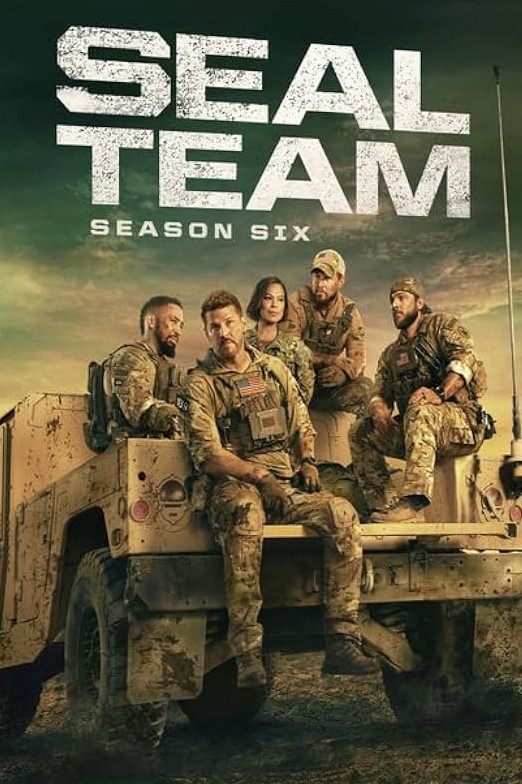
Seal Team (2017)
Written by Benjamin Cavell, John Glenn, Kenny Ryan, Spencer Hudnut, and Kenny Sheard
Seal Team (Nope, nope—not what you think)
One night I was walking through our home library, and my bride was watching something she found on Amazon Prime. I passed through the room a couple of more times and talked with her about what she was viewing, watched a couple of minutes, and then sat down and paid attention. The series is called Seal Team.
From what I understand the series was first aired in 2017. It stars and is directed by David Boreanaz, whom I don’t recognize from acting in any other role, but whom I understand has had several. While in the series there is a fair amount of what my bride calls “bang ‘em up, shoot ‘em up” action, showcasing that they’ve obviously worked hard on the spec ops for verisimilitude—people, personalities, attitudes, spec op gear, battlefield situations and awareness, and most of all, the off battlefield day to day living at home (in this case they are based in Virginia Beach, VA).
Tier One Operators (including elite members from the Navy SEALs, Army, and Air Force, with units like Delta Force and the 24th Special Tactics Squadron representing non-SEAL Tier One operators.) are the Entrepreneur Owner-Managers of our warrior forces. I have never seen a series or video or movie that so beautifully captures the life arc and career arc of an entrepreneur warrior over the course of his/her life so well.
Jason Hayes (Boreanaz) is Bravo 1, the leader of the Bravo Team of Seals. The story line nominally is a military-themed show that balances family, drama, loyalty, and war. We have found it to have realistic/believable plots that deeply engaged us and frequently drew us into the lives of Bravo Team SEALs both during missions—and perhaps even more significantly—at home.
Boreanaz is completely believable as Bravo 1 Jason Hayes. He began his career as a charismatic, jokey, but deadly capable Bravo 3. We watched him morph from a Team member, into a heavy, serious, frequently glum or depressed Bravo 1 as the years of responsibility for the team and the authority vested in him wore grooves in his brain and his consciousness. Like many EOMs he is more comfortable in his role as Bravo 1 than he is in his personal life. We have repeatedly seen this friction in high-performing EOMs, and this series captured it beautifully and empathically.
In addition to Boreanaz, we developed a few other favorite cast members like A.J. Buckley who plays Sonny, a seemingly Texas redneck whom you quickly learn has powers of observation and emotion that match his combat skills. My favorite characters hands down are Max Thieriot as Clay, the “new guy” (and the smartest guy), and Tony Trucks who played Lisa Davis, an intelligence officer assigned to Bravo (but who is not a Seal).
The show stands out for its military authenticity in the depiction of SEAL operations and personal sacrifices. The individual roles are so highly developed into complex characters which were so realistic that we felt a part of their lives and talked about them during the day and evening when not watching the show! The quality of the writing was spectacular that the only job that would get me up in the morning, the way Bigelow does would be being a writer for the Seal Team series.
Entrepreneur Owner-Manager Quote
"If you’re not passionate about your profession, you won’t have the grit or perseverance to compete with those who are."
—Ken Griffin, Founder & CEO of Citadel, one of the world's most successful hedge funds

© 2025 Bigelow LLC. All rights reserved.